The client was designing a pull-up pant product. ADL layers add cost and manufacturing complexity, and a well-known brand had already shipped a similar product without one. The question: is ADL truly necessary?
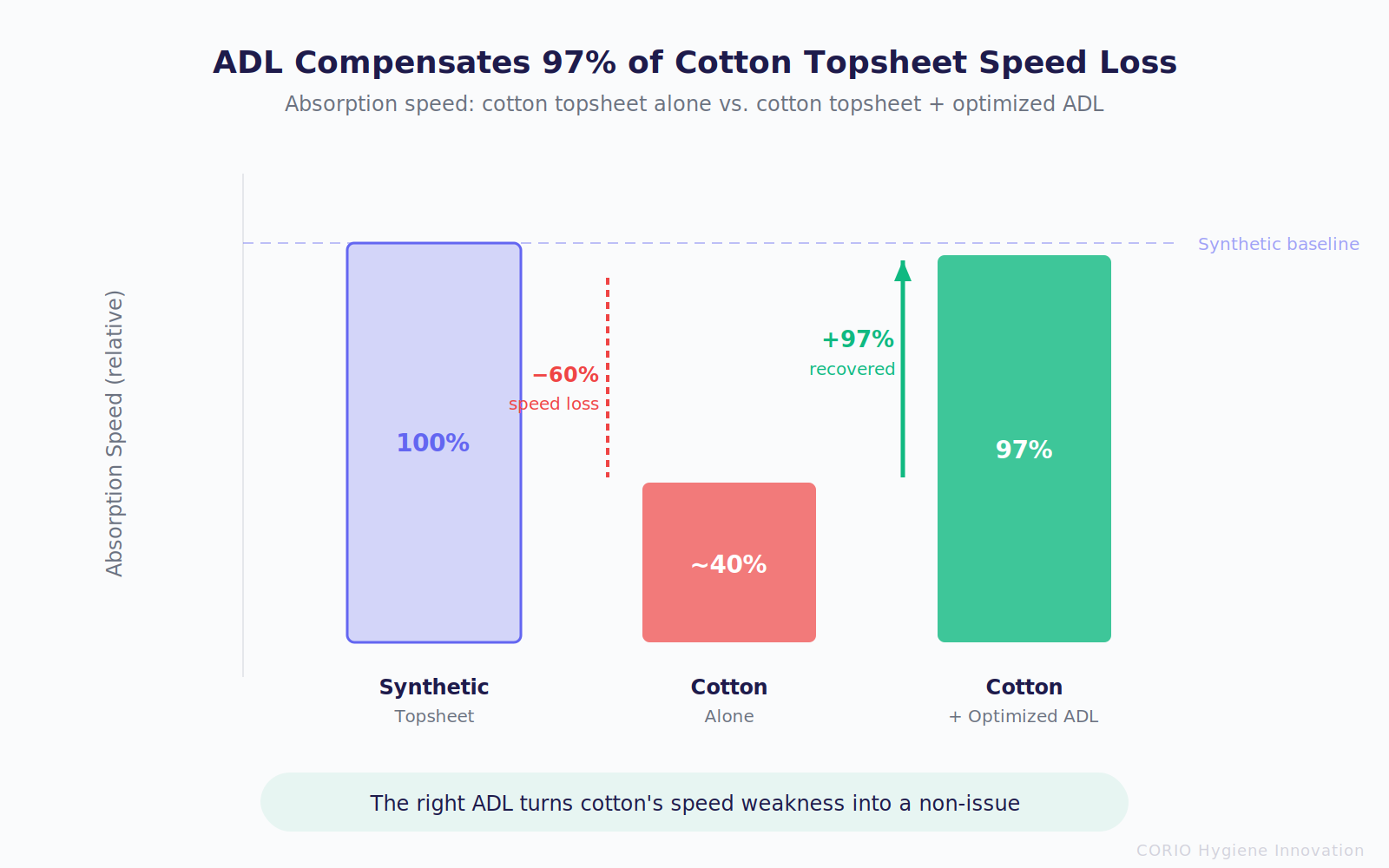
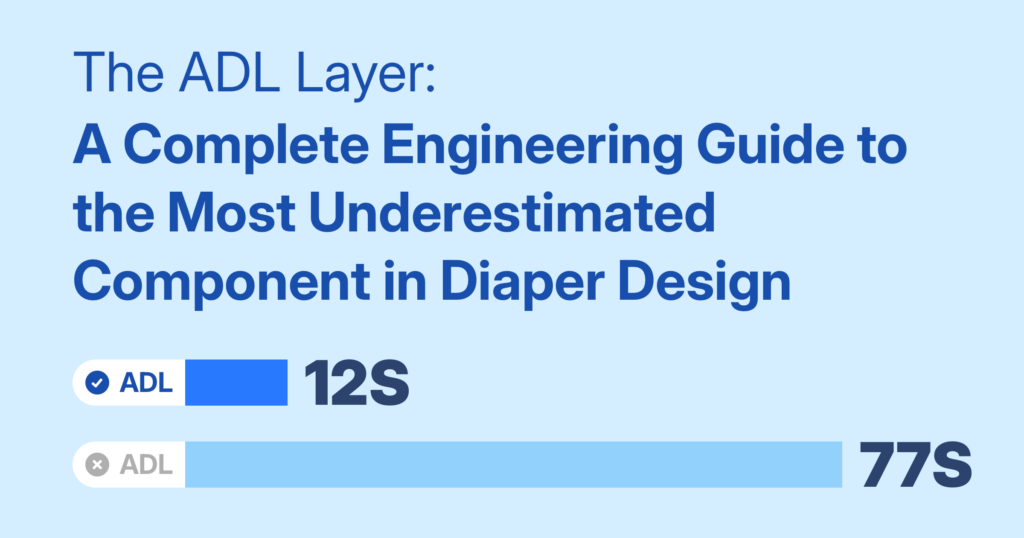
We built a definitive answer across four independent verification streams — DOE cross-swap, N=5 formal validation, dual-baseline raw material testing, and an 8-candidate ADL horizontal evaluation. Removing ADL caused absorption speed to collapse from 12 seconds to 77 seconds. But the data revealed deeper structure: the ADL’s two sub-layers (B1 funnel-shaped perforated acquisition film + B2 thermal-bonded nonwoven) serve completely different engineering functions. B1 handles 97.3% of the speed compensation. B2 handles rewet buffering — but when tested alone, B2 actually increased 2nd-dose rewet by 2.6× compared to the full ADL.
ADL is not one layer — it is a two-component system where each sub-layer has a distinct engineering role. Removing either one produces a different failure mode.
The client kept ADL in the architecture — and gained the engineering vocabulary to specify it properly to manufacturers, rather than passively accepting whatever the production side defaults to.