Most procurement processes treat supplier screening — part of a broader qualification funnel fed by structured audit questionnaires as a one-time qualification check — review certificates, check capacity, ask for pricing, then rank and order. This approach works in categories where suppliers are highly homogeneous, but in cotton diaper topsheet — where suppliers are concentrated, category capability gaps are enormous, and most producers serve a different end market — a single round is fundamentally insufficient.
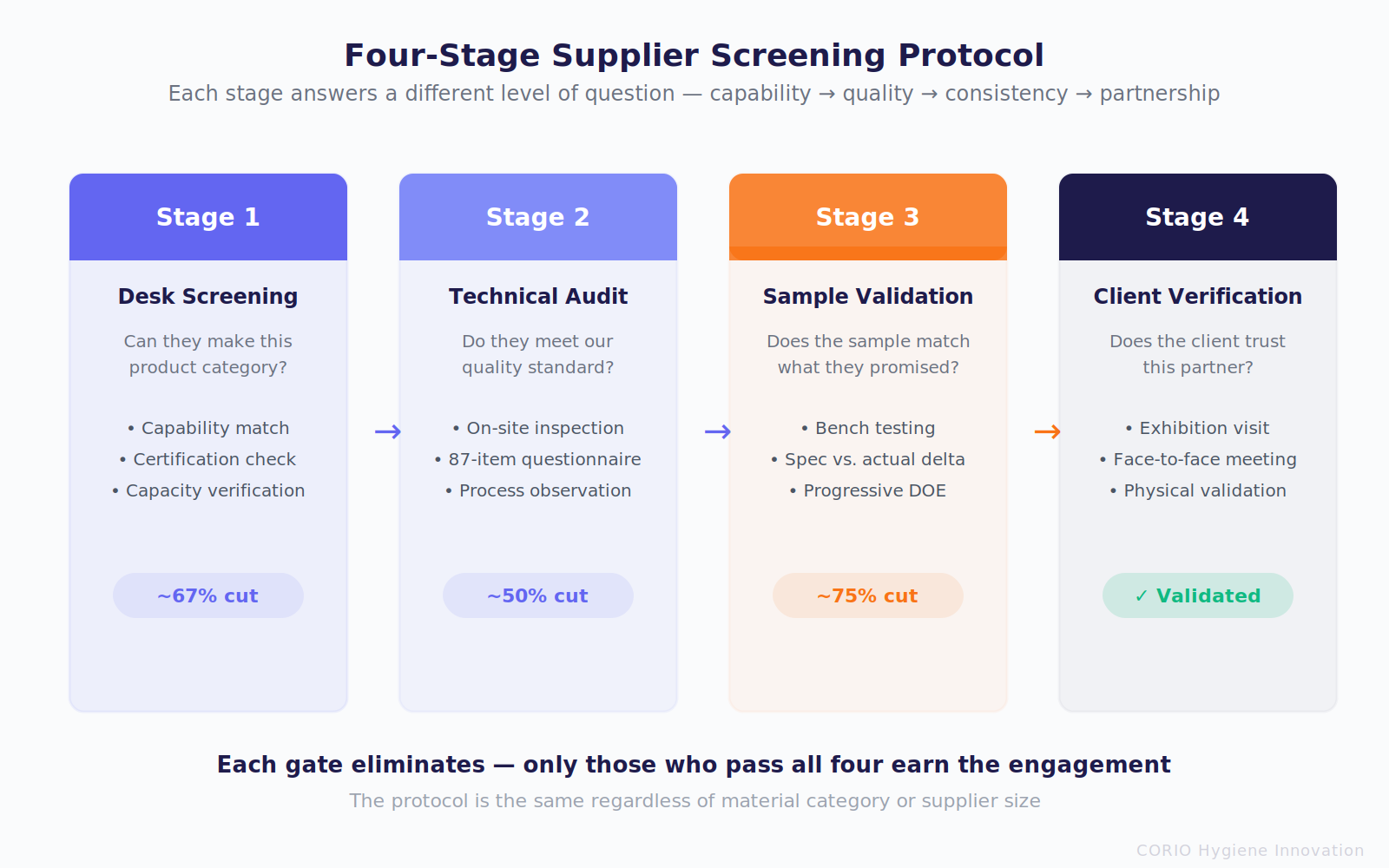
We designed a four-stage progressive funnel, each stage answering a different level of question.
• Stage 1 (desk screening): build the candidate pool from public information and industry databases, eliminating suppliers lacking basic category experience — this round does not eliminate "bad" suppliers, but those "not in this race at all."
• Stage 2 (in-depth technical engagement): using customized questionnaires and structured technical dialogue, assess whether the supplier has the specific process capability the client requires — not just "can they make cotton topsheet" but "can they make diaper-grade cotton topsheet."
• Stage 3 (sample evaluation): physical samples undergo the exact same testing protocol used for competitive benchmarks, judged by data rather than promises.
• Stage 4 (on-site verification): facility visits or exhibition face-to-face assessment confirming production scale, quality control systems, team capability, and the "engineering culture" that remote communication cannot verify.
Each stage's exit criteria are predefined — not "doesn't feel right" but "failed check item X." This makes the screening process repeatable, auditable, and fully transparent to the client, showing exactly where each supplier stands and why.