Proof Insights Start a Project
Supply Chain

Method 08

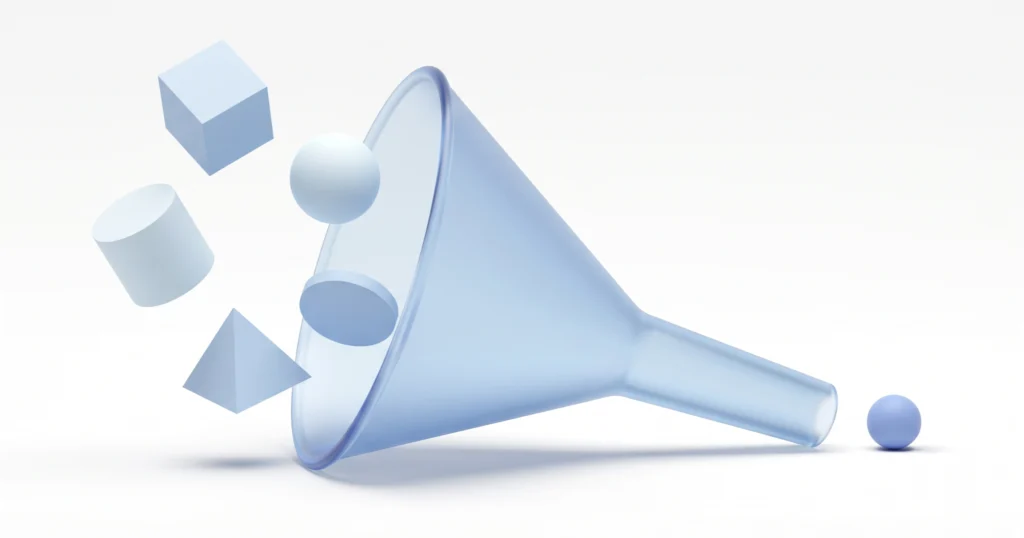
Supply Chain Qualification Funnel

Problem it solves: You receive supplier recommendations based on relationships, trade show encounters, and sales pitches — not verified capability data. The supplier that presents best in a meeting is not always the supplier that performs best on a production line. By the time you discover the gap, you have invested months.

Supply Chain Qualification Funnel
Home Methods Supply Chain Qualification Funnel

Engineering Process

How It Works

We operate a four-stage qualification funnel that narrows the field systematically:


Stage 1 — Broad Outreach: candidates identified through our supplier network, trade associations, and material manufacturer referrals. Screened against basic capability thresholds: equipment type, format range, certifications, geographic location. In a recent engagement, this stage started with 45 candidates across multiple material categories.


Stage 2 — Desktop Qualification: detailed questionnaire covering quality systems, production capacity, material sourcing, export experience, and communication infrastructure. In that same engagement, this stage reduced the field by more than half within two weeks.


Stage 3 — Deep Evaluation: independent sample testing, facility assessment (on-site or structured remote), and reference verification. This is where claimed capability meets measured reality — and where the largest gaps between presentation and performance surface.


Stage 4 — Pilot Validation: trial production run with the selected partner to verify that qualification-stage performance holds at production volume and speed.


Differentiation

Why Only CORIO

Supplier qualification requires knowing what to look for — and what to look past. A factory with gleaming equipment and ISO certificates can still produce inconsistent product if their process controls are informal. A smaller factory with older equipment can outperform if their operators have deep experience running the exact product format you need.


We have stood on both sides of this evaluation. As supplier-side engineers, we learned which factory capabilities are real and which are presentation-day showpieces — because we were the ones preparing those presentations. As brand-side procurement managers, we learned which qualification criteria actually predict production success and which are checkbox theater.


In our most recent engagement, our Stage 3 deep evaluation uncovered that the highest-scoring supplier from Stage 2's desktop review could not maintain consistent adhesive application at the production speeds required for the client's volume targets. That finding — invisible on paper, obvious on the production line — prevented a partnership commitment that would have failed at scale.


Deep Dive

Full Detail

The qualification funnel is designed to answer one question at each stage: should this supplier advance or exit?

After Stage 1: A shortlist of candidates that meet minimum capability thresholds — you do not waste time evaluating suppliers that cannot run your product format.

After Stage 2: A scored comparison matrix covering quality systems, capacity, export readiness, and communication infrastructure — you see how candidates compare before committing to site visits or samples.

After Stage 3: Independent test data from actual samples, facility assessment scores, and verified references — you make the selection based on measured performance, not presented capability.

After Stage 4: Production validation data confirming that qualification-stage quality holds at production speed and volume — the last gate before committing to a supply relationship.

Each stage costs less than the one after it. The funnel structure ensures you invest the most time and money only on suppliers that have already passed every preceding filter.

See Our Methods in Action

Describe your current challenge. We'll map it to the right methodology and tell you exactly what we'd do — before any commitment.