Midway through the project, the client’s product direction encountered a process constraint: a functional design feature originally envisioned was incompatible with a material pathway already locked into the development plan. The conventional response would be “switch the material” or “lower the functional requirement” — essentially, compromise in the face of the constraint.
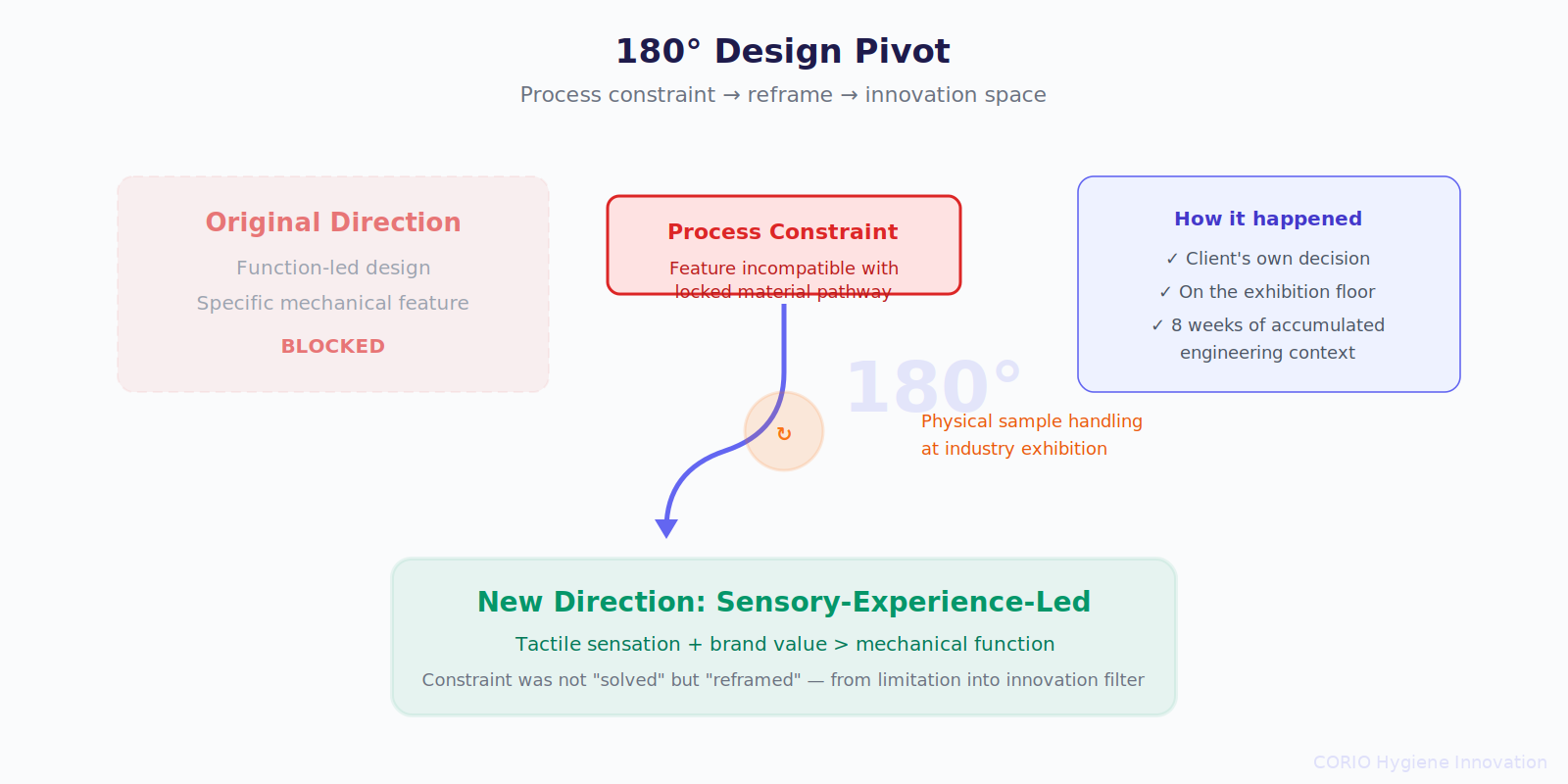
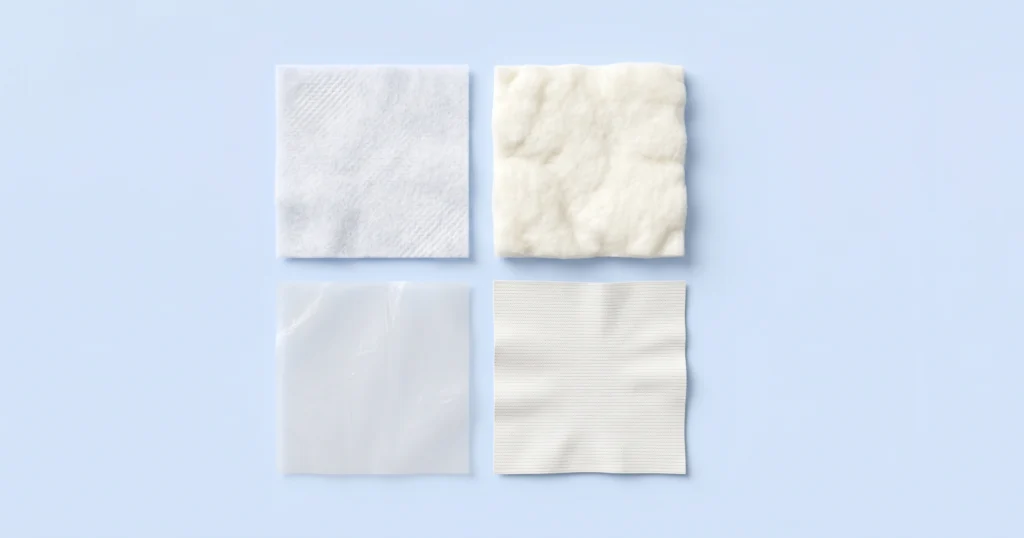
But at an industry exhibition, when the client physically handled multiple material samples, an unexpected cognitive shift occurred. The constrained-away functional feature had inadvertently cleared space for a different design direction — one centered on tactile sensation and sensory experience rather than a specific mechanical function. The client no longer needed the original feature because she had discovered a product expression with stronger brand value than the function it replaced.
This 180° pivot had several notable characteristics. First, it was the client’s own decision, not a consultant’s recommendation — she connected the logic chain between process constraints, material properties, and brand positioning while handling the samples — a pattern consistent with how she later voluntarily simplified the project scope based on her own analysis. Second, it happened on the exhibition floor, not in a meeting room — physical experience provided decision input that data alone could not. Third, the constraint was not “solved” but “reframed” — from a limitation into a filter that pointed toward the innovation space.
Our contribution was not providing the answer. It was constructing the environment in which the answer surfaced naturally: carefully prepared material samples, a structured on-site comparison experience, and eight weeks of accumulated engineering context including detailed sensory evaluation frameworks.