The client’s understanding of how their product compared to competitors was based on consumer reviews, retailer feedback, and marketing materials. No one had physically taken the products apart and measured them against engineering parameters.
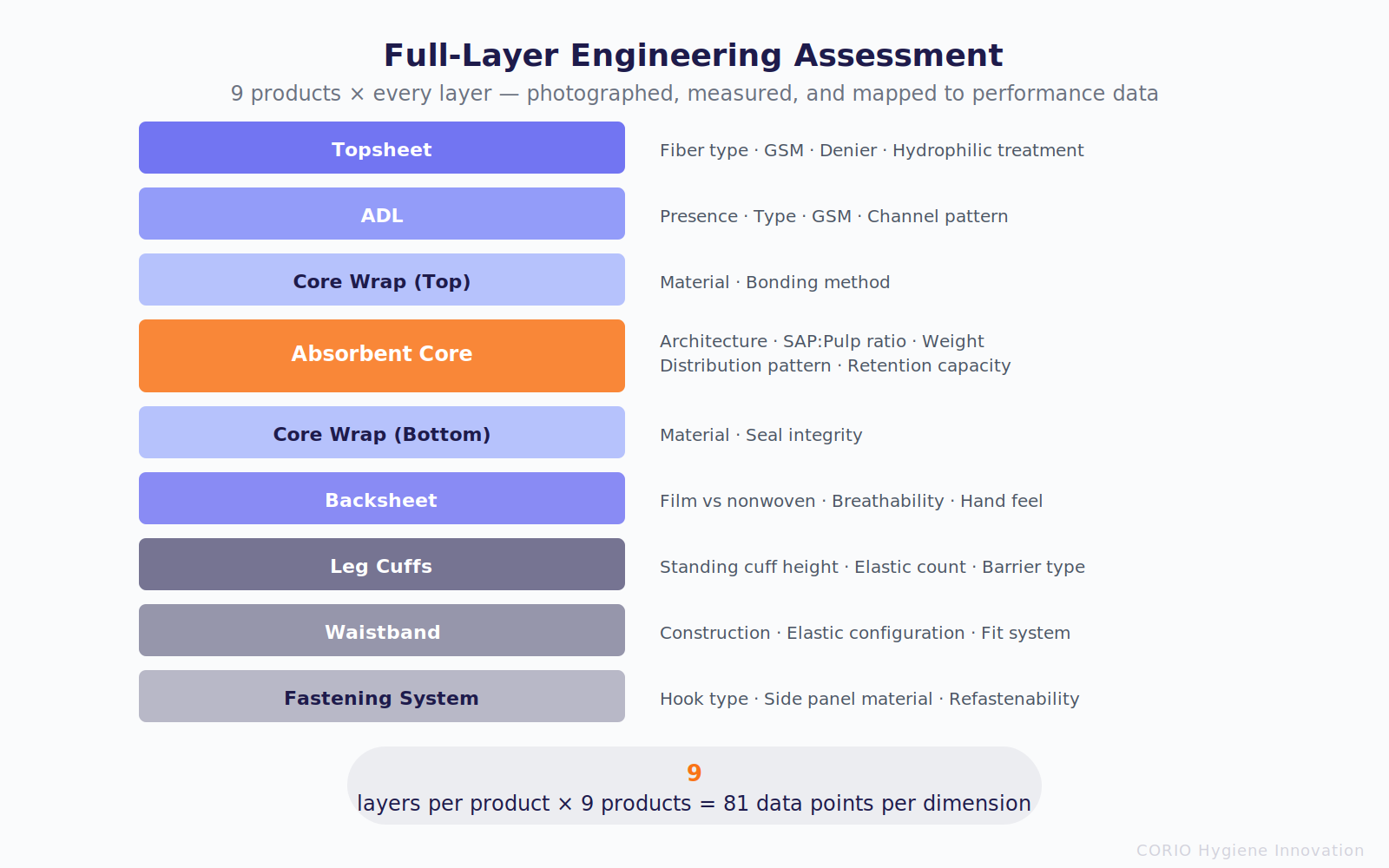
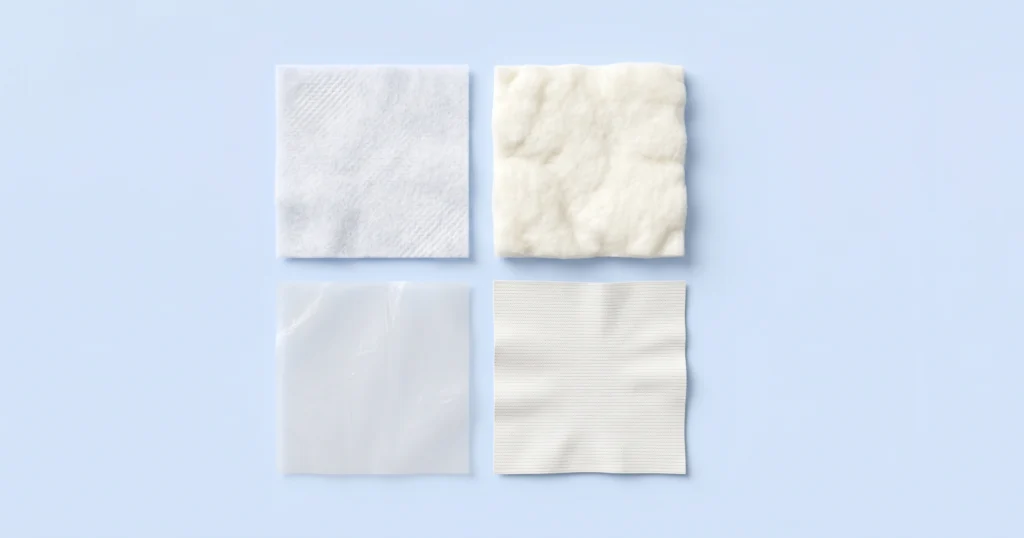
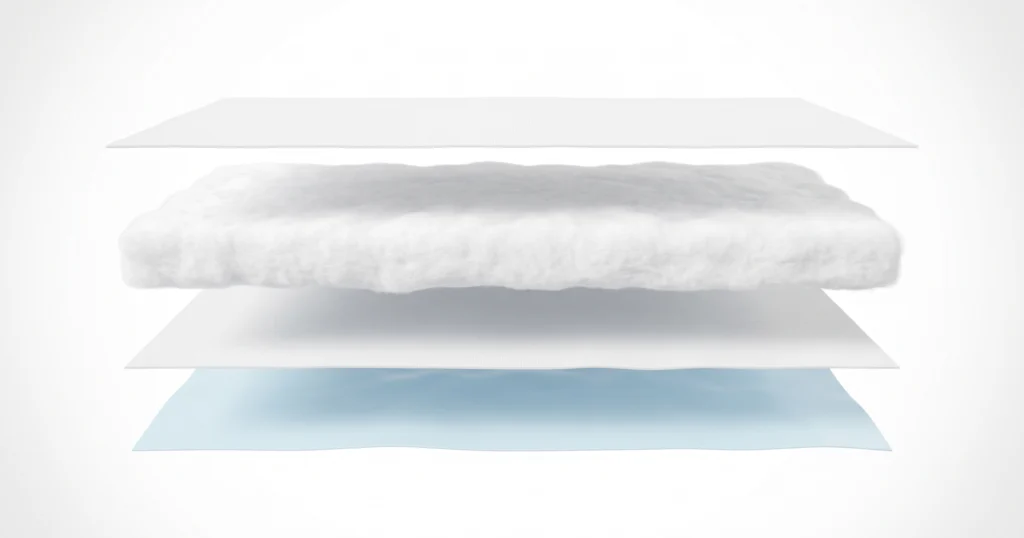
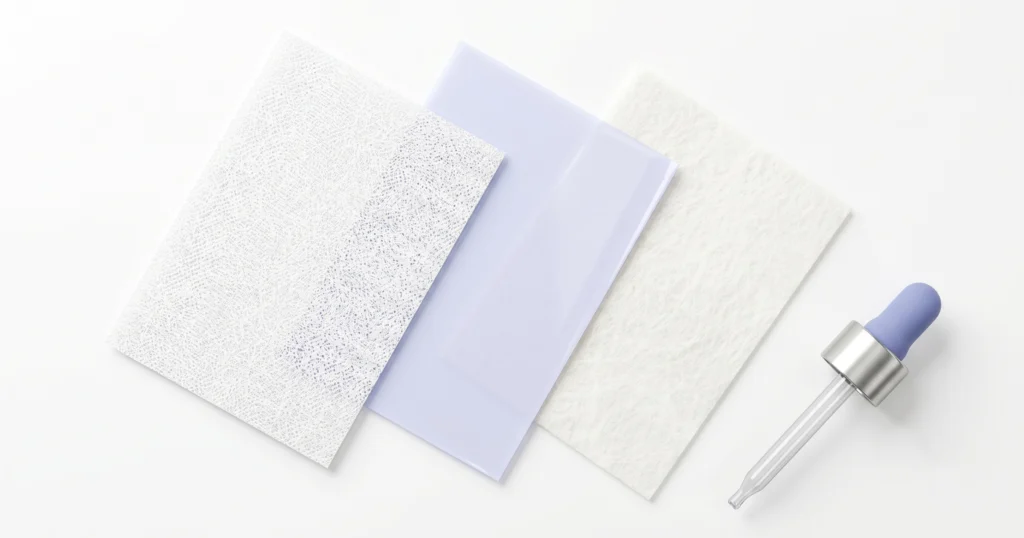
We acquired 9 products from retail channels — spanning both diapers and pull-up pants across 6 brands, including the client’s own. Each product was disassembled into 11 to 13 structural layers. Every layer was individually photographed — full view and fiber-level magnification — measured for dimensions, weight (N=5 repetitions, 0.01g precision), and material composition, then mapped into a reverse-engineered bill of materials.
The assessment revealed blind spots invisible from the outside: the client’s backsheet used the most basic material in the competitive set (for the engineering impact of material choices, see our ADL analysis), while a premium-positioned competitor performed below expectations on rewet metrics.
Physical teardown exposes the engineering choices that spec sheets hide — adhesive types, elastic configurations, layer stacking sequences, and manufacturing tolerances.
This teardown archive became the reference standard for all subsequent product engineering decisions. The client’s senior technical advisor began printing these reports and cross-referencing them against weekly technical updates.