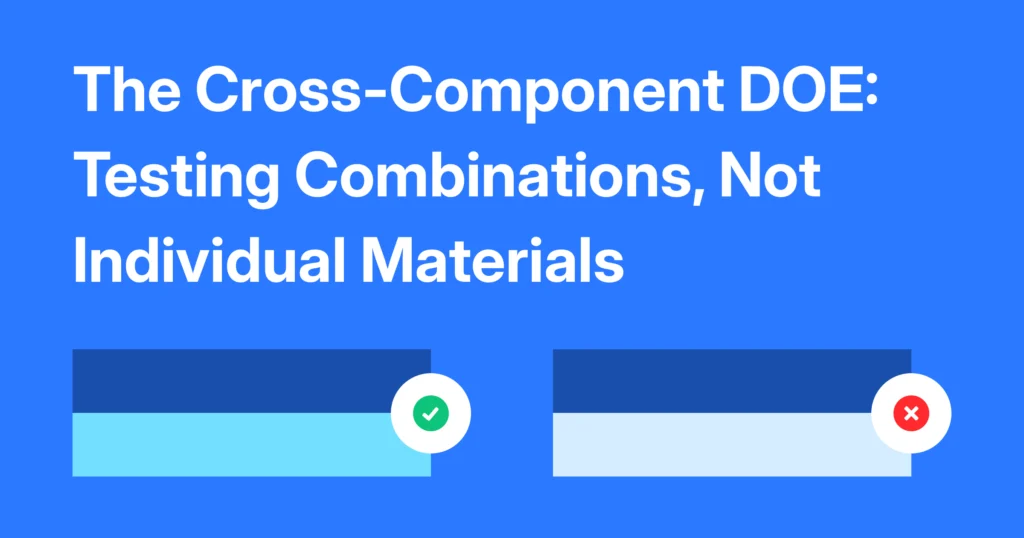
During competitive teardown and DOE cross-swap testing, we discovered an unexpected fact: the highest-performing configuration in the entire test matrix was not any existing product's original structure — it emerged only when material layers from two different brands were cross-combined.
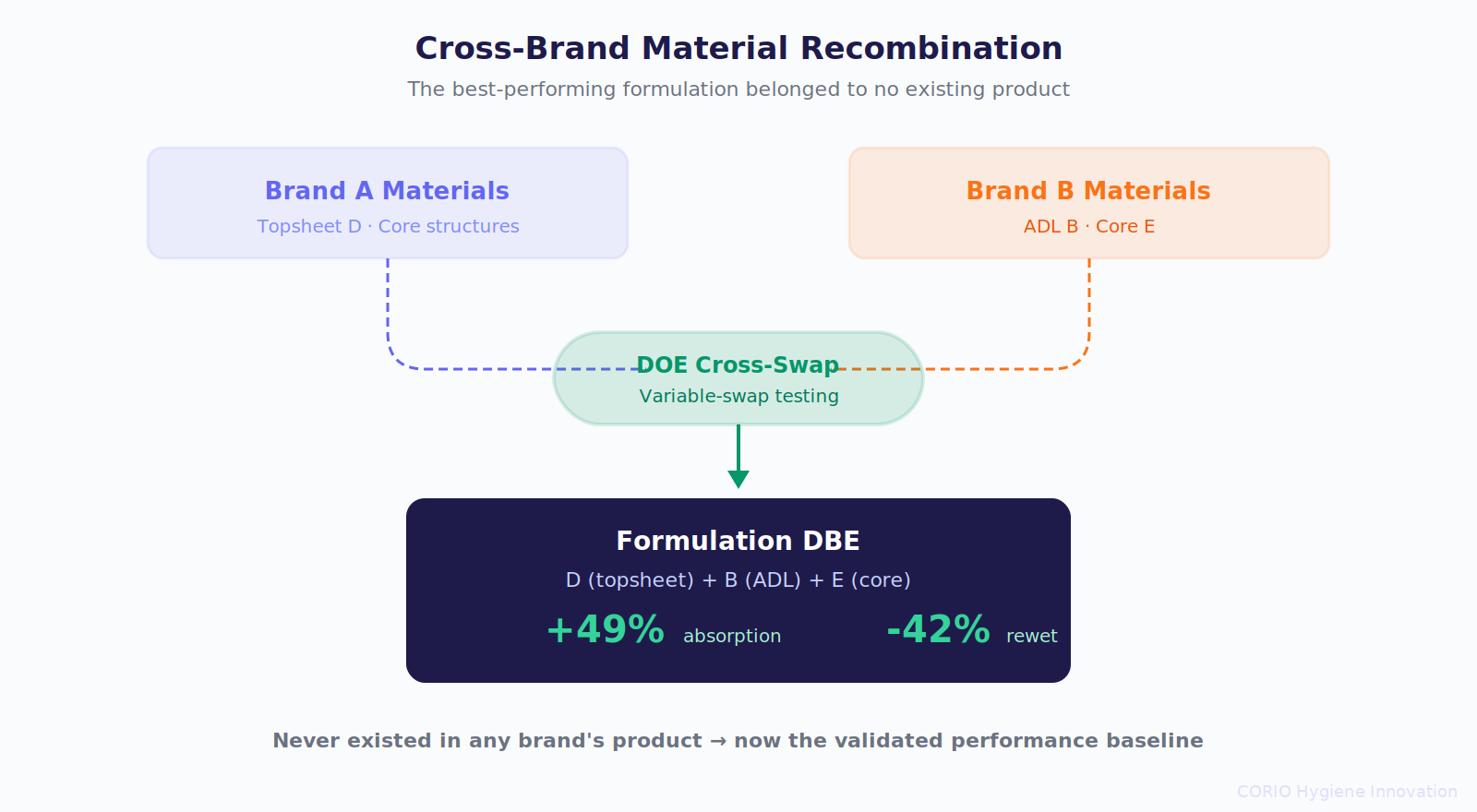
The optimal formulation (DBE — competitor topsheet D + client ADL B + competitor core E) achieved approximately 42% improvement in third-dose rewet and 49% improvement in second-dose absorption speed compared to the client's original product. In subsequent N=5 formal validation, DBE's multi-round rewet data passed all performance thresholds set against the competitive benchmark — it was not merely "better," but met production-grade engineering standards.
Yet this formulation does not exist on any shelf. Two manufacturers each use these materials in their own products — but neither has ever combined them and tested the result. It is not a formulation that was "abandoned." It is a formulation that was never "discovered." Only through systematic cross-teardown and variable-swap testing can this kind of buried performance potential be extracted from commercially available materials.
For the client, DBE is not the final product formulation — it is a validated performance baseline. Any subsequent material proposal must outperform DBE to be considered. A formulation that has never existed in any brand's product became the safety floor for the entire development pipeline.