The client needed 100% cotton topsheet for a pull-up pant product. This sounds like a standard material procurement need — contact suppliers, compare prices, place orders. But supplier screening revealed a structural bottleneck that the industry underestimates.
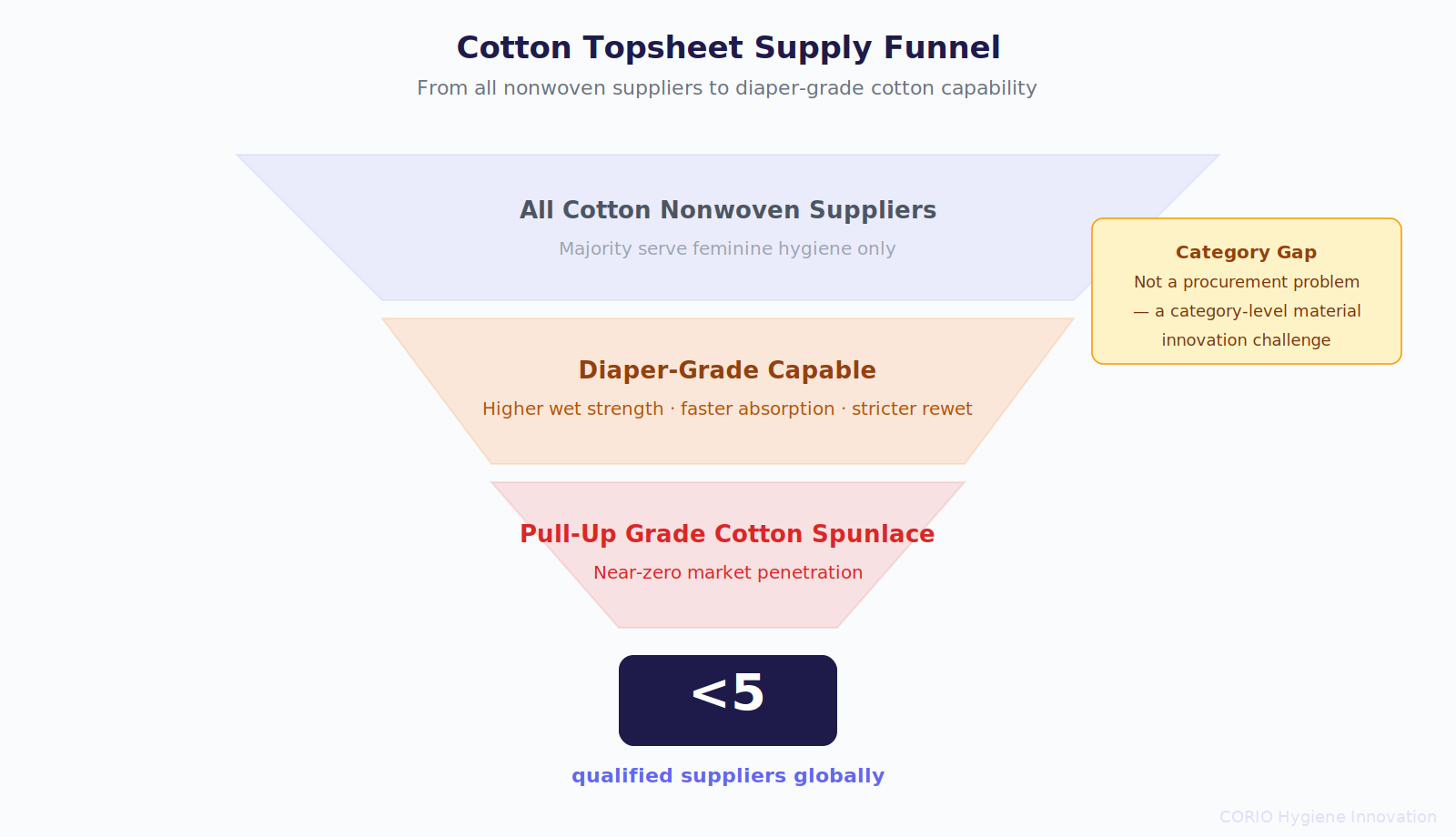
The vast majority of cotton nonwoven suppliers primarily serve feminine hygiene. The two categories have fundamentally different engineering requirements for cotton topsheet: diapers demand higher instantaneous absorption speed (single void volume far exceeds menstrual flow), stronger wet strength (multiple doses plus extended wear), and stricter rewet control. Among the topsheet suppliers we contacted, over half were eliminated in the first screening round for lacking diaper-grade engineering capability.
The pull-up category is even more extreme: 100% cotton spunlace topsheet penetration in pull-up pants is near zero — virtually no pull-up products on the market currently use this topsheet material. This means the client's requirement is not just testing supplier capability — it is pushing a category-level material innovation where no ready-made solution exists in the supply chain.
Understanding the structural reasons behind supply scarcity — whether it is a category gap or a capability gap — is itself a critical input to the product development strategy.