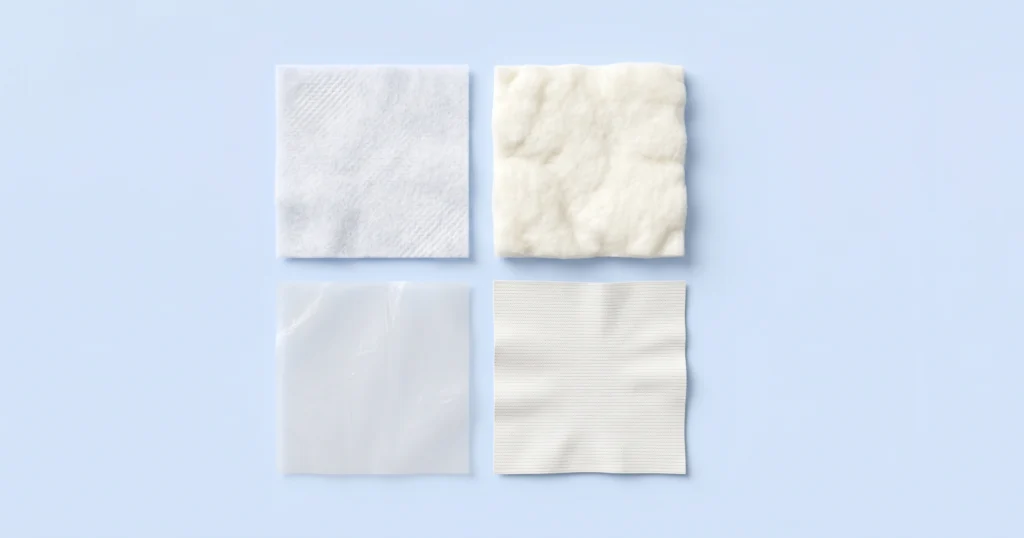
We conducted N=5 formal comparison testing between two core architectures — fluff pulp and composite — in the same product form factor. The results were not a linear difference but a structural divide.
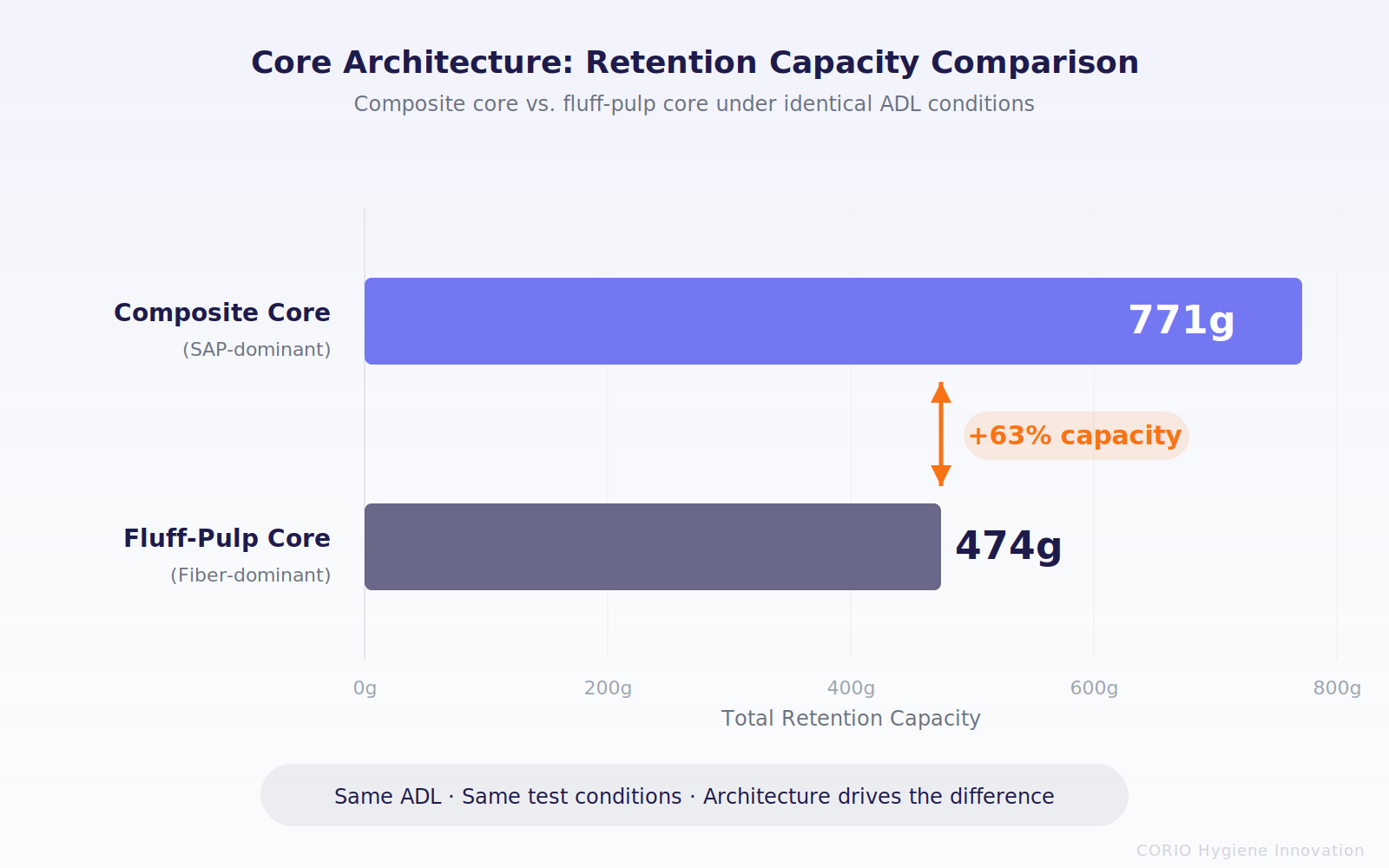
The composite-core product achieved total absorption of 771g — the highest in the entire market, exceeding the second-place product by over 30%. Retention volume reached approximately 670g at a retention rate of approximately 87%. Twelve-hour overnight rewet stayed under 2g, matching the dry-back level of the category’s best-performing product — proving that massive capacity and top-tier dryness can coexist.
The fluff pulp core product achieved total absorption of 474g with a retention rate of approximately 79%. Both products weighed nearly the same (less than 1g difference), yet the performance gap reached +40.8% in retention volume and nearly 8 percentage points in retention rate.
The critical insight: the composite core’s advantage does not come from “using more SAP” or “being heavier.” It comes from the multi-layer carrier structure optimizing SAP spatial distribution (see also: the weight-performance paradox). The same SAP dosage performs dramatically differently in different structural arrangements.
This finding locked the client’s core architecture direction: fluff pulp is not “adequate but cheaper” — its performance ceiling is too low to support the brand’s positioning.