Meeting debrief is standard practice in consulting — typically “let’s discuss how it felt.” We engineered it.
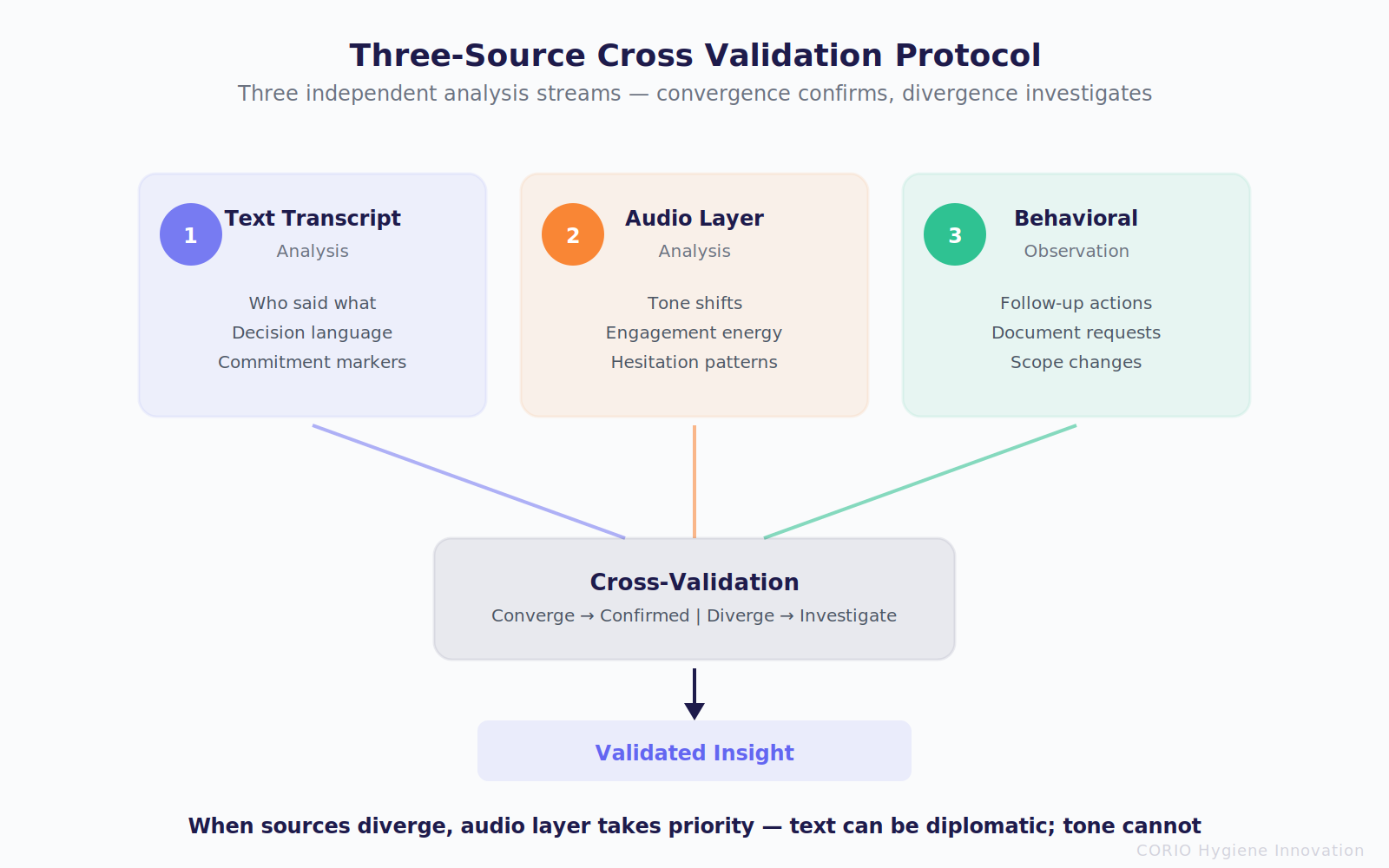
For every client working session, we simultaneously generate three independent analysis streams: Source 1 — text transcript analysis (who said what, frequency patterns, keyword trend shifts); Source 2 — audio paralinguistic analysis (tempo changes, pause patterns, tonal shifts — examining the physical characteristics of sound, not content); Source 3 — structured pre-session agenda execution review (which points were delivered as planned, which were skipped, where the client lingered longest).
The three sources are completed independently before cross-comparison. When all three point to the same conclusion, we mark it as “cross-confirmed.” When they diverge — for example, text analysis suggests the client agreed, but audio analysis shows a sudden tempo decrease (hesitation signal) — we do not pick the favorable conclusion. We record the divergence itself.
This methodology extends to another dimension: test data credibility. When raw material test data diverges from the adhesive-inclusive teardown baseline, we do not assume the test was flawed — we trace the root cause to material specification discrepancies, replacing statistical anomalies with engineering explanations.