Supplier screening — the remote phase following four-stage qualification methodology, each visit preceded by structured negotiation preparation has a fundamental tension: remote evaluation is efficient but information-limited; on-site visits are information-rich but costly. Most companies choose one or the other — either all-remote (cheap but risky) or all-onsite (thorough but slow and expensive).
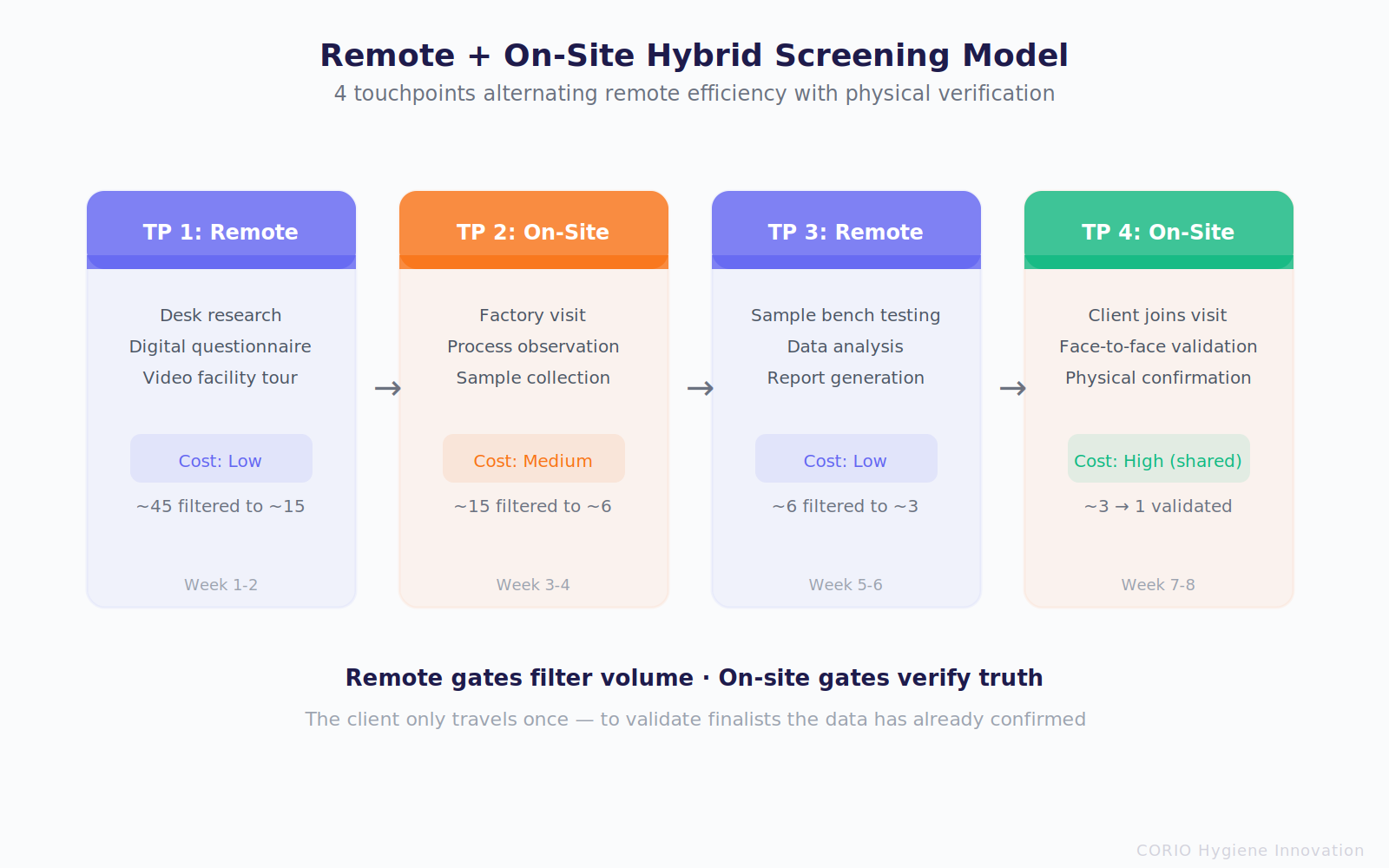
We designed a hybrid model that treats remote and on-site as two serial stages rather than two mutually exclusive options.
The remote phase covers the first three screening layers: desk screening (public information + industry databases), structured questionnaire (customized evaluation), and sample testing (standardized protocol on the same equipment). After these three layers, each supplier has a data-based capability profile — independent of subjective judgment, independent of the supplier's self-description.
The on-site phase is the "physical verification" of that data profile: facility visits or exhibition face-to-face, confirming dimensions that remote data cannot verify — actual production line condition (vs. marketing brochures), quality team's real capability (vs. certification documents), management's attitude toward quality (vs. written commitments). We call this "engineering culture assessment" — equipment can be upgraded, certifications can be purchased, but an organization's engineering DNA requires in-person sensing.
The exhibition format pushed on-site verification efficiency to its limit: face-to-face contact with dozens of suppliers across 3 days — each conversation entered with the data profile already established from the remote phase, focusing on-site time on "data verification" and "personnel assessment" rather than starting from scratch with basic information collection.