The client asked: “How long until samples are ready?” The industry-standard answer is “a few weeks.” That is not a decision-grade response.
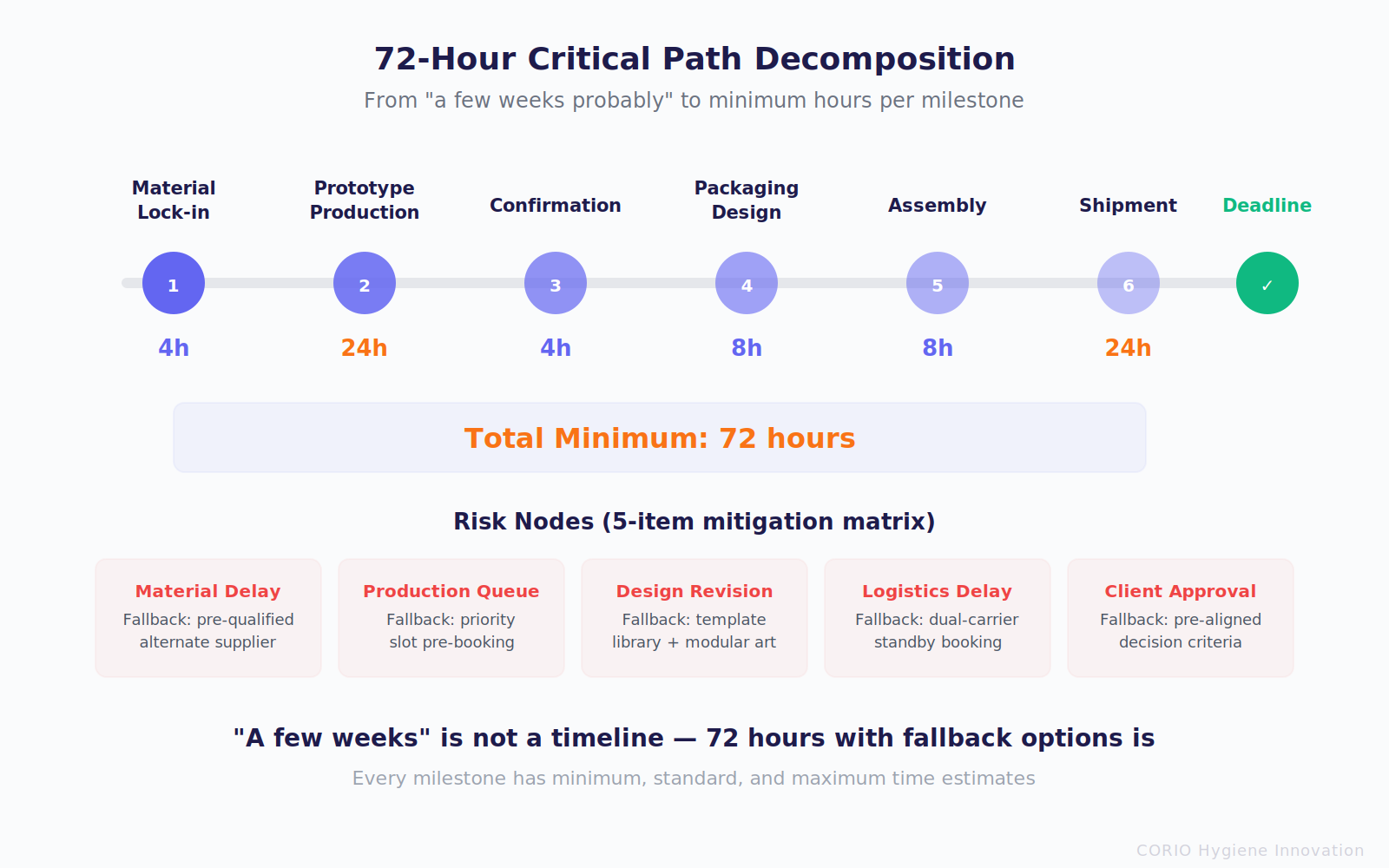
We decomposed “a few weeks” into a day-level critical path (underpinned by engineered time margin methodology and a weekly delivery rhythm): material lock-in, prototype production, confirmation, outer packaging design, assembly, shipment, and the retail channel deadline — 7 milestones, each annotated with minimum, standard, and maximum time estimates. The total minimum critical path: 72 hours from material lock-in to shipment. A 5-item risk mitigation matrix identified potential delay factors and fallback options at each node.
The delivery calendar design was equally critical: a weekly matrix view across multiple parallel workstreams, allowing the client to see at a glance what arrives this week, what arrives next week, which tracks run in parallel, and where dependencies exist. When the exhibition week required adjusting the regular delivery rhythm, the calendar automatically reshuffled — delivery did not stop; it changed form.
The client’s retail channel deadline was firmly defined. Our supply chain preparation was complete before the timeline was finalized — multiple backsheet configurations with prototype samples ready. The difference between “prepared and waiting for the signal” and “waiting for the signal to start preparing” is the value of this critical path.